Each generation of computer is characterized by a major technological development that fundamentally changed the way computers operate, resulting in increasingly smaller, cheaper, more powerful and more efficient and reliable devices.
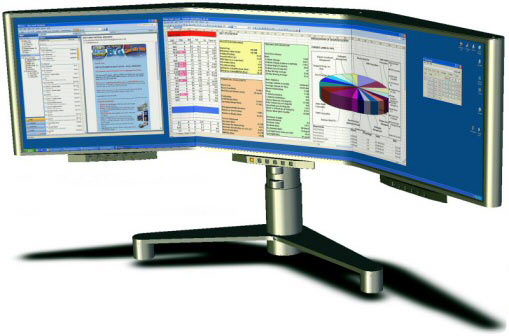
The history of computer development is often referred to in reference to the different generations of computing devices. Each generation of computer is characterized by a major technological development that fundamentally changed the way computers operate, resulting in increasingly smaller, cheaper, more powerful and more efficient and reliable devices. Read about each generation and the developments that led to the current devices that we use today.
First Generation (1940-1956) Vacuum Tubes

The first computers used vacuum tubes for circuitry and magnetic drums for memory, and were often enormous, taking up entire rooms. They were very expensive to operate and in addition to using a great deal of electricity, generated a lot of heat, which was often the cause of malfunctions.
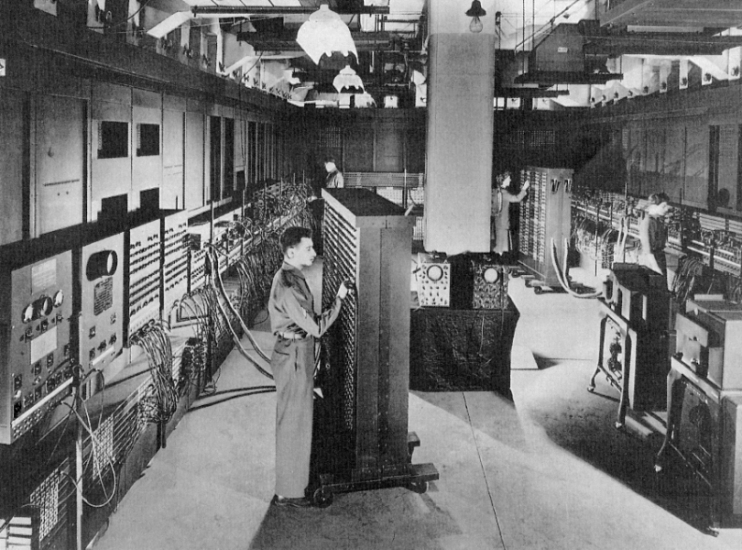
First generation computers relied on machine language, the lowest-level programming language understood by computers, to perform operations, and they could only solve one problem at a time. Input was based on punched cards and paper tape, and output was displayed on printouts.
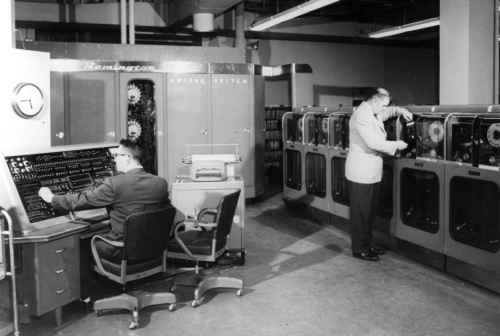
The UNIVAC and ENIAC computers are examples of first-generation computing devices. The UNIVAC was the first commercial computer delivered to a business client, the U.S. Census Bureau in 1951.
Second Generation (1956-1963) Transistors

Transistors replaced vacuum tubes and ushered in the second generation of computers. The transistor was invented in 1947 but did not see widespread use in computers until the late 1950s. The transistor was far superior to the vacuum tube, allowing computers to become smaller, faster, cheaper, more energy-efficient and more reliable than their first-generation predecessors. Though the transistor still generated a great deal of heat that subjected the computer to damage, it was a vast improvement over the vacuum tube. Second-generation computers still relied on punched cards for input and printouts for output.

Second-generation computers moved from cryptic binary machine language to symbolic, or assembly, languages, which allowed programmers to specify instructions in words. High-level programming languages were also being developed at this time, such as early versions of COBOL and FORTRAN. These were also the first computers that stored their instructions in their memory, which moved from a magnetic drum to magnetic core technology.
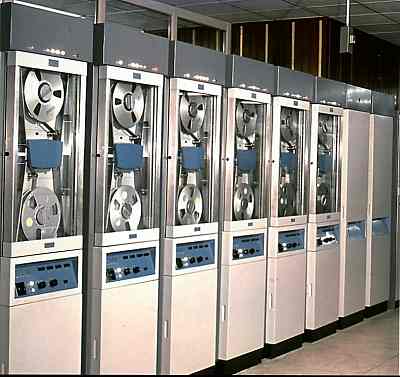
The first computers of this generation were developed for the atomic energy industry.
Third Generation (1964-1971) Integrated Circuits

The development of the integrated circuit was the hallmark of the third generation of computers. Transistors were miniaturized and placed on silicon chips, called semiconductors, which drastically increased the speed and efficiency of computers.

Instead of punched cards and printouts, users interacted with third generation computers through keyboards and monitors and interfaced with an operating system, which allowed the device to run many different applications at one time with a central program that monitored the memory. Computers for the first time became accessible to a mass audience because they were smaller and cheaper than their predecessors.

Fourth Generation (1971-Present) Microprocessors

The microprocessor brought the fourth generation of computers, as thousands of integrated circuits were built onto a single silicon chip. What in the first generation filled an entire room could now fit in the palm of the hand. The Intel 4004 chip, developed in 1971, located all the components of the computer—from the central processing unit and memory to input/output controls—on a single chip.

In 1981 IBM introduced its first computer for the home user, and in 1984 Apple introduced the Macintosh. Microprocessors also moved out of the realm of desktop computers and into many areas of life as more and more everyday products began to use microprocessors.

As these small computers became more powerful, they could be linked together to form networks, which eventually led to the development of the Internet. Fourth generation computers also saw the development of GUIs, the mouse and handheld devices.
Fifth Generation (Present and Beyond) Artificial Intelligence

Fifth generation computing devices, based on artificial intelligence, are still in development, though there are some applications, such as voice recognition, that are being used today. The use of parallel processing and superconductors is helping to make artificial intelligence a reality. Quantum computation and molecular and nanotechnology will radically change the face of computers in years to come. The goal of fifth-generation computing is to develop devices that respond to natural language input and are capable of learning and self-organization.

Artificial intelligence (AI) is the intelligence of machines and the branch of computer science that aims to create it. AI textbooks define the field as “the study and design of intelligent agents” where an intelligent agent is a system that perceives its environment and takes actions that maximize its chances of success. John McCarthy, who coined the term in 1956, defines it as “the science and engineering of making intelligent machines.”

The field was founded on the claim that a central property of humans, intelligence—the sapience of Homo sapiens—can be so precisely described that it can be simulated by a machine. This raises philosophical issues about the nature of the mind and the ethics of creating artificial beings, issues which have been addressed by myth, fiction and philosophy since antiquity. Artificial intelligence has been the subject of optimism, but has also suffered setbacks and, today, has become an essential part of the technology industry, providing the heavy lifting for many of the most difficult problems in computer science.
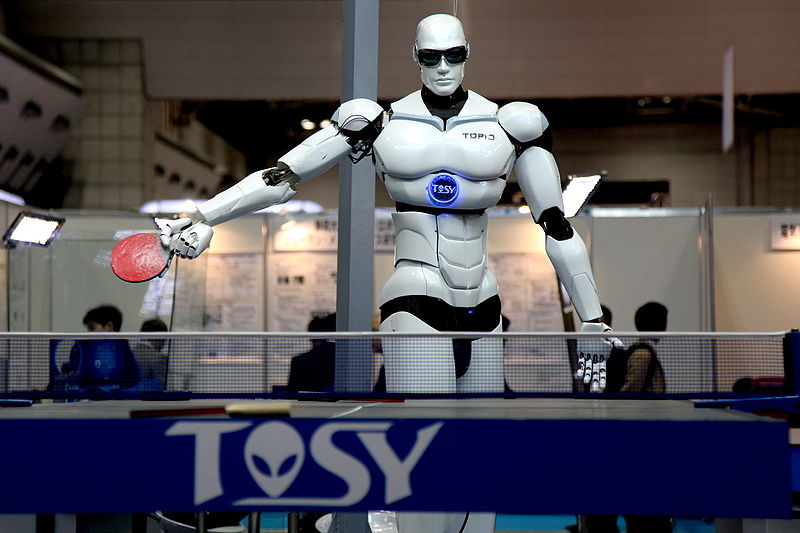
AI research is highly technical and specialized, deeply divided into subfields that often fail to communicate with each other. Subfields have grown up around particular institutions, the work of individual researchers, the solution of specific problems, longstanding differences of opinion about how AI should be done and the application of widely differing tools. The central problems of AI include such traits as reasoning, knowledge, planning, learning, communication, perception and the ability to move and manipulate objects. General intelligence (or “strong AI”) is still among the field’s long term goals.
Read other post about Computer History:
Inventors of the Modern Computer (Konrad Zuse)
Inventors of the Modern Computer (John Atanasoff and Clifford Berry)
Inventors of the Modern Computer (Howard Aiken and Grace Hopper)
The History of the ENIAC Computer
The History of the UNIVAC Computer
http://twitter.com/#!/fuchme/status/83806073580032000


 Fahmi Rahman
Emily
January 4, 2011 at 20:16:48
I posted about this very subject myself recently, and it was great to see your view on it fahmirahman.
fahmirahman
January 10, 2011 at 13:19:22
thx Emily, hope this post useful for you.. 🙂
Sam Roy - Secretary To GM (IRCON INTERNATIONAL LIMITED)
June 6, 2012 at 16:07:29
Excellent Post Buddy!!!!! It Helped A Lot
efosa frank
April 12, 2011 at 01:56:50
please the computer made in all the generation and thier authors
fahmirahman
April 19, 2011 at 17:50:27
read below the post, hope you like it 🙂
Vlarie Wambui
September 10, 2016 at 16:53:36
Hey,,thankyou so much for your help,,its such a treasure,,may God bless you so much
Authentic
April 28, 2011 at 14:02:35
Welcome to a Facebook Page about mine,I’ve learned a lot from your blog here,Keep on going,my friend,I will keep an eye on it,One more thing,thanks for your post!.
fahmirahman
April 28, 2011 at 14:06:30
thx a lot bro.. hope it’s useful for you 🙂
Erieze John A Lagera
June 29, 2011 at 20:09:40
This post is very useful, most especially for the newbies who want to know about the history of computer. Thank you sir fahmirahman, your post helps a lot. The infos are complete and precise.
fahmirahman
June 30, 2011 at 13:17:58
U’re welcome bro.. hope it’s useful for you.. many thx for the feedback.. 🙂
amos emmanuel
January 7, 2016 at 15:20:01
thatz cul love it coz i hv learnt more man
JISHNU M MENON
September 10, 2011 at 09:45:48
your post is really useful…thanks a lot…v r having a topic about thiss in our college….
poop
September 16, 2014 at 02:22:03
im in 7th grade and am doing this and ur in college LOL!!!
binyam nuguse
October 30, 2011 at 17:01:13
Thanks i learn a lot from this
azeemasters@gmail.com
November 2, 2011 at 21:49:49
nice information not nyce picsss
Top Dinko
January 7, 2016 at 15:29:50
where are ur fine pics mannnnn!!!!!!
Dunia said
November 4, 2011 at 01:58:53
I want to know those about computer
Iqra Chaudhary
November 11, 2011 at 22:57:28
I want to know computers name which is used in third, fourth nad fifth generations of computer history and detail of each computer
MASSOM CH
December 11, 2015 at 23:08:32
ARE YOU MISS IQRA
afzaal
November 28, 2011 at 16:29:54
very informative…
Umanga paudel
December 3, 2011 at 21:05:25
Thanks 4 publishing such material becoz it helped me 2 submit colleges assignment 4 BBA
bob
October 5, 2012 at 01:58:30
talk right
thank you
Naveed shahzad
December 4, 2011 at 12:09:14
good imformation about computer.well done
Nishant kumar
December 7, 2011 at 03:21:33
Sir
in my opinion first genaration computer(1945-1955) is it right or not . I have studied from a book
Nishant kumar
December 7, 2011 at 03:22:35
Sir
in my opinion first genaration computer(1945-1955) is it right or not . I have studied from a book. Pls sir tell me
lebert glashin
December 5, 2012 at 06:38:26
The computer or special and evey year we or nigh to the future
Nasha Badhy
January 10, 2013 at 13:14:35
hi thnx u lot giving history of computer , can u give more information about iBM family and micro family computers
Abdul Latheef.A
March 16, 2013 at 01:15:01
Very nice post
thank u
latheef
roofing
April 30, 2013 at 12:41:45
Pretty nice post. I just stumbled upon your weblog and wanted to
mention that I’ve really loved browsing your blog posts. In any case I’ll
be subscribing to your rss feed and I hope you write once more soon!
shazeb quadri
January 2, 2014 at 15:35:32
its very usefull thank you..
how to get alot of likes on instagram
March 6, 2014 at 07:19:37
I truly love your website. Pleasant colors
& theme. Did you make this website yourself?
Please reply back as I’m looking to create my own personal site and
would love to know where you got this from or just what
the theme is called. Appreciate it! how to get alot of likes on instagram regarding instagram advertising
instagram likes in addition to grow your sociable presence.
free instagram likes supplies quality interpersonal providers.
shiekh hammad
March 24, 2014 at 14:14:35
very nice
it is very useful
Sheemal Prasad
May 21, 2014 at 00:39:56
Excellent post, it helped in my presentation, didn’t have to open too many blogs, it had all the information in this entire site. Simple and beautifully put, thnxx again
guide4photoh34.com
June 4, 2014 at 09:51:59
Everything is very open with a very clear clarification of the issues.
It was really informative. Your website is very useful.
Thank you for sharing!
irish birthday wishes
July 8, 2014 at 07:05:55
I am regular reader, how are you everybody? This post posted at
this web page is actually nice.
j jaz
July 21, 2014 at 20:13:15
it is fuuuuuuuucked
amos emmanuel
January 7, 2016 at 15:26:21
thatz nt fine at all i ddnt lk d post
twitter
September 18, 2014 at 14:00:45
Great blog here! Also your web site loads up very fast!
What web host are you using? Can I get your affiliate link
to your host? I wish my website loaded up as quickly as
yours lol. twitter
twitter
facebook
September 21, 2014 at 15:41:26
It’s actually very complicated in this active life to listen news on Television, thus I
just use the web for that reason, and take the latest information. facebook
facebook
facebook
instagram
September 25, 2014 at 17:32:34
Do you have any video of that? I’d care to find out some additional information. instagram
instagram
instagram
mirmotozapchastei
November 11, 2014 at 20:18:39
После того как я изначально оставил комментарий I кажется, есть нажал на на -notify меня, когда новые комментарии
являются added- флажок и сейчас когда комментарий добавляется я получать 4 письма с точно такой же
комментария. Там должен быть средства Вы
в состоянии удалить меня от этой услуги?
Приветствия !
youtube
November 14, 2014 at 10:04:37
Hello! This post could not be written any better! Reading this post reminds
me of my good old room mate! He always kept talking about this.
I will forward this write-up to him. Fairly certain he will
have a good read. Thank you for sharing! youtube
youtube
twitter
December 11, 2014 at 14:24:31
Wonderful goods from you, man. I’ve understand your
stuff previous to and you are just extremely wonderful. I really like what you have acquired here, certainly like what you are saying and the way in which you say it.
You make it enjoyable and you still take care of to keep
it wise. I can’t wait to read much more from you.
This is actually a tremendous website. twitter
twitter
juan velasco
February 19, 2015 at 05:20:33
thank u this helps me in class 🙂
marcos garcia
February 19, 2015 at 05:22:55
this helps me in class to lol juan 🙂
I like poop
February 19, 2015 at 05:25:09
Buy my shirts
ilovepie
March 26, 2015 at 23:23:36
poop
ilovepie
March 26, 2015 at 23:23:56
its suckes
egan
April 5, 2015 at 13:48:56
good evolution
Harga Samsung Galaxy Terbaru
May 28, 2015 at 04:11:59
I’m now not sure the place you’re getting your
information, however good topic. I must spend a while learning much more or figuring out more.
Thank you for excellent info I was looking for this info for my mission.
Muhammad zayyan
August 6, 2015 at 19:46:40
Where do i see references?
Ayyat Fatima
November 15, 2015 at 13:20:14
its superb i learn alot from this
MASSOM CH
December 11, 2015 at 23:06:37
its nice collection and information for computer history keep it up
akinpelumi
June 17, 2016 at 14:05:46
It’ completely detailed
focus barick
September 2, 2016 at 03:51:22
thankx a lot it iz very usefull to me, i was not understand anything about computer generation, but through your explanation, i got a big knoeledge about it.
Scannerrage51x
February 12, 2017 at 21:40:54
http://4lomza.pl/forum/read.php?f=2&i=103269&t=103269
Shopping for a new or used auto can be quite a difficult process if you do not know what you are actually undertaking. By educating yourself about vehicle shopping before you go to the dealership, you can make stuff much easier on your own. The following tips will help the next shopping vacation be more satisfying.
Constantly take a technician alongside when shopping for a whole new vehicle. Auto merchants are well known for offering lemons and you do not want to be their following target. If you can not get a auto mechanic to think about cars together with you, a minimum of be sure that you have him review your closing option before buying it.
Know your restrictions. Before you start store shopping for your forthcoming car or pickup truck, decide how much you can afford to pay, and adhere to it. Don’t neglect to incorporate interest in your estimations. You can expect to pay out all around 20 % as an advance payment as well, so be ready.
Before attending a car dealership, know what sort of motor vehicle you need. Analysis all you choices prior to buying in order to evaluate which works the best for your financial allowance and family members needs. Shop around to discover exactly how much you should pay for a prospective vehicle.
Before signing any contract take time to read every single line, like the small print. If you find nearly anything detailed you do not understand, usually do not sign before you get an respond to that you recognize. Unsavory salesmen are able to use a binding agreement to put numerous service fees that had been not reviewed.
In the event you keep your previous advice at heart next time which you go looking for a vehicle, you will be prone to get a better deal. Purchasing a car lacks to be a frustration. Simply use the guidelines out of this write-up and you can receive the car you need at the good price.
carrievc16
August 30, 2017 at 07:37:10
New project
http://arab.egypt.adultnet.in/?entry.amira
lost-found malia makola magazines specials
ruta jean
November 7, 2017 at 15:21:02
nice and amazing guys am about to create a new computer which will be able to charge a phone as a cover..that charge will a phone cover and it wil work with solar energies..thank you for your supports..engineers
Stubby
November 26, 2019 at 02:02:57
i have to read this Miss Roberts told me two
MarionPew
September 1, 2020 at 19:07:19
htttp://drutho9738.dvrlists.co/sitemap.xml